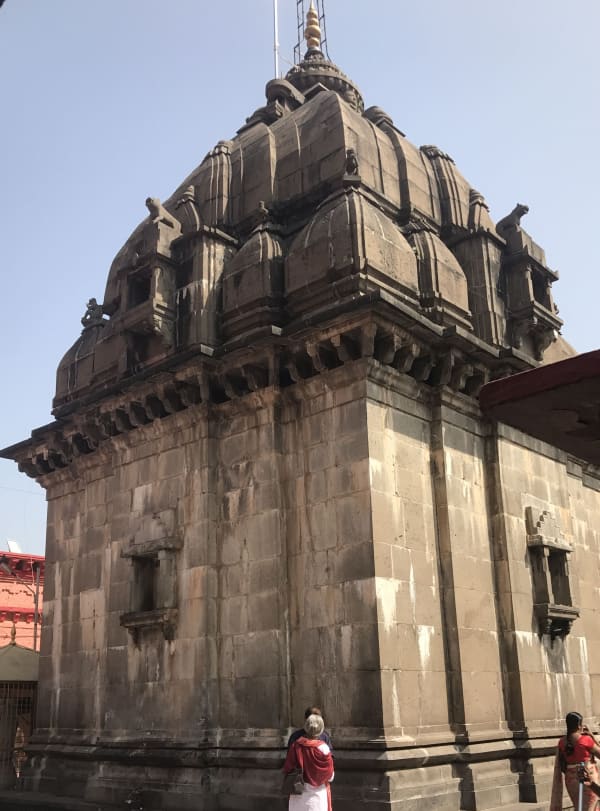
Among the twelve Jyotirlingas, a few names are claimed by more than one shrine, each held by its own region as the place where that light appeared. Two such seats stand in Maharashtra. Aundha Nagnath, in Hingoli, is revered as Nageshwar, of the Nageshwar chapter of the Shiva Purana, in which Shiva rescues the devotee Supriya from the demon Daruka and abides at the spot as the lord of serpents; the same name is also honoured at a shrine near Dwarka in Gujarat. Parli Vaijnath, in Beed, is revered as Vaidyanath, the healer among the Jyotirlingas, whose name means lord of physicians; tradition tells that Ravana bore the linga southward from Kailasa and was made to set it upon the ground here, where it stayed rooted, and the shrine at Deoghar in the east carries the same name.
Rather than a matter to be settled, devotees have long treated these shared names as an abundance of grace — for to worship at each seat is to honour every tradition that holds it dear. At Parli, Tulsi is offered to Shiva and Bilva to Vishnu, a sign of the two great streams of devotion meeting as one.