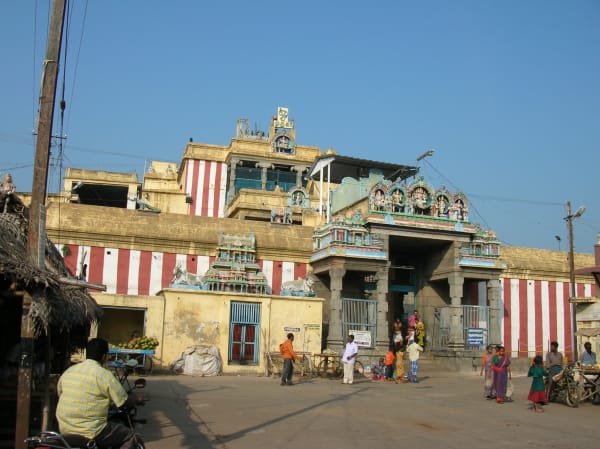
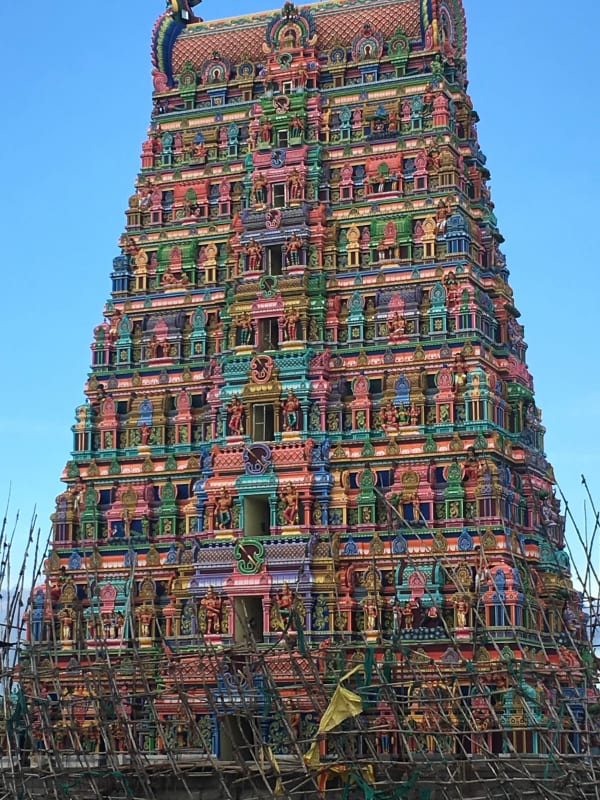
The six abodes of Murugan — the warrior son of Shiva, called also Kartikeya, Skanda, and Subrahmanya — are the shrines the Tamil tradition holds as his chosen homes on earth. They are named together in the Tirumurukarruppadai, a poem of the Sangam age by the poet Nakkeerar, which sends the devotee as a traveller from one abode to the next in search of the god. Each has its own character: Thiruparankundram, where tradition places Murugan's marriage to Deivanai; Thiruchendur, on the shore where he is said to have overcome the demon Surapadma; Palani, where he stands as a renunciate, staff in hand and clad as an ascetic; Swamimalai, where the child Murugan is honoured as teacher to Shiva himself, expounding the meaning of the sacred syllable Om; Tiruttani, where he settled in peace after his victories; and Pazhamudircholai, a forest shrine among the hills.
Between them these six carry the whole arc of his story — birth, battle, marriage, renunciation, and grace. To make the round of the six is a cherished journey for his devotees, following the same path the ancient poet mapped in praise of the god who is ever young.