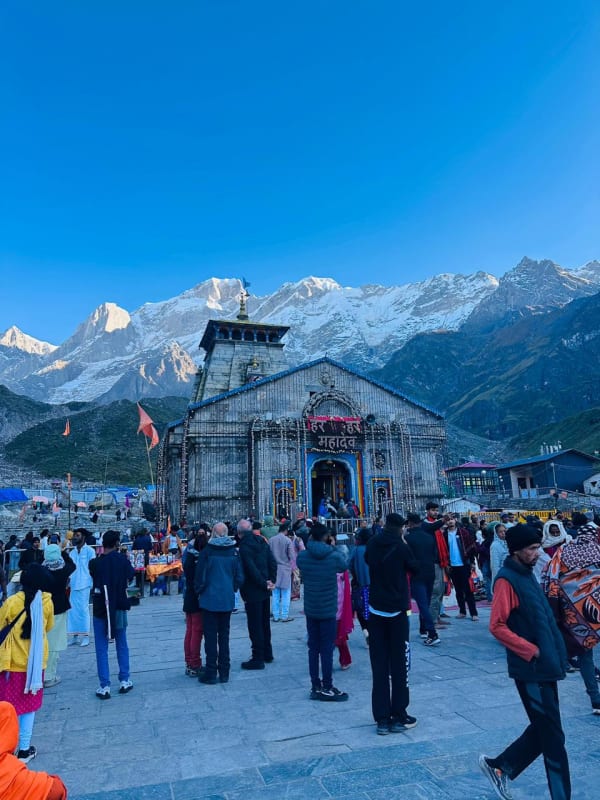
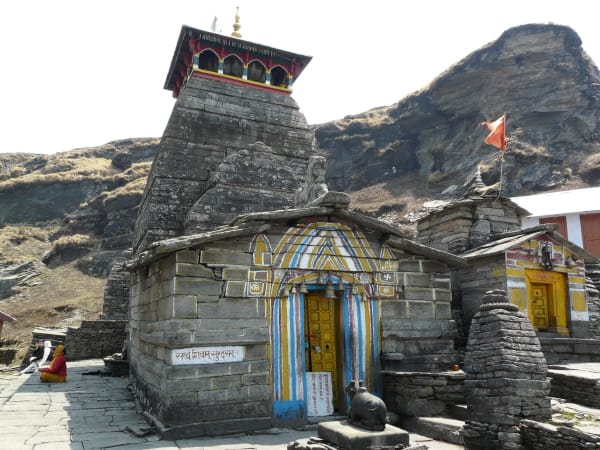
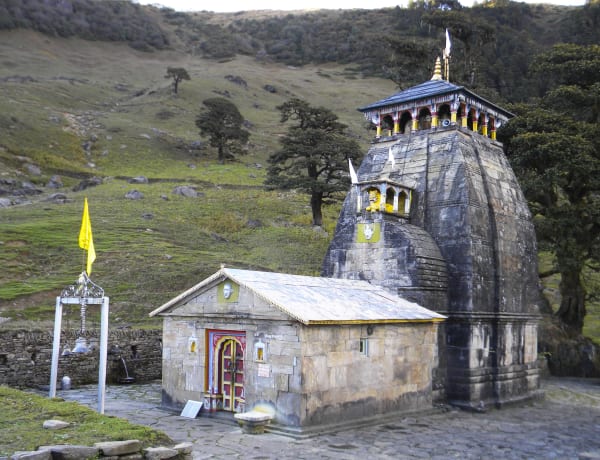
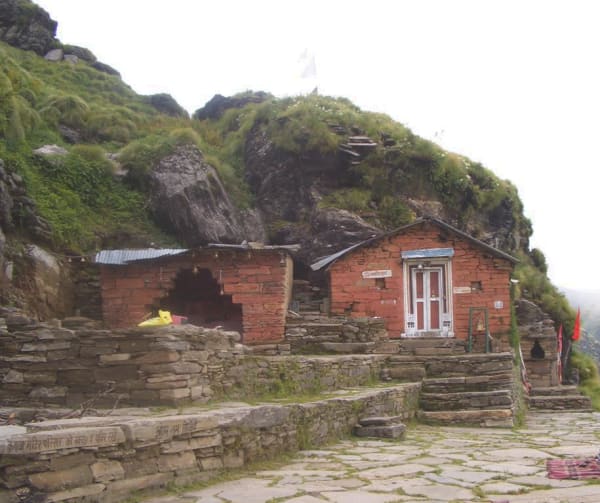
Five shrines of Shiva stand scattered high in the Garhwal Himalayas, bound together by a story from the Mahabharata told in the Kedarakhanda. After the war at Kurukshetra, the Pandavas, burdened by the killing of their own kin, sought Shiva to be absolved; but Shiva, unwilling to face them, took the form of a bull and slipped into the earth of the mountains. Where the parts of that form later rose again, the Pandavas raised temples — the hump at Kedarnath, the arms at Tungnath, the face at Rudranath, the navel at Madhyamaheshwar, and the matted hair at Kalpeshwar. These are the Panch Kedar.
Kedarnath, where the Pandavas' penance found its end, is also counted among the Jyotirlingas, and from there tradition holds they passed by the heavenly path to their liberation. The five lie far apart across remote high country, reached on long footpaths through forest and snow, and pilgrims walk them in turn, beginning at Kedarnath. The tale carries a quiet teaching — that grace withheld from those who come with unclean hearts is granted the moment the seeking is true — and to complete the round is to follow the Pandavas' own road from sorrow to absolution.