Festival calendar
Festivals
Festivals with their dates, the traditional calendar day of each, and what each one marks. Dates shown run from August 2026 to May 2027.
Months follow the amanta calendar used in Maharashtra.
Happening now
Upcoming
23 festivals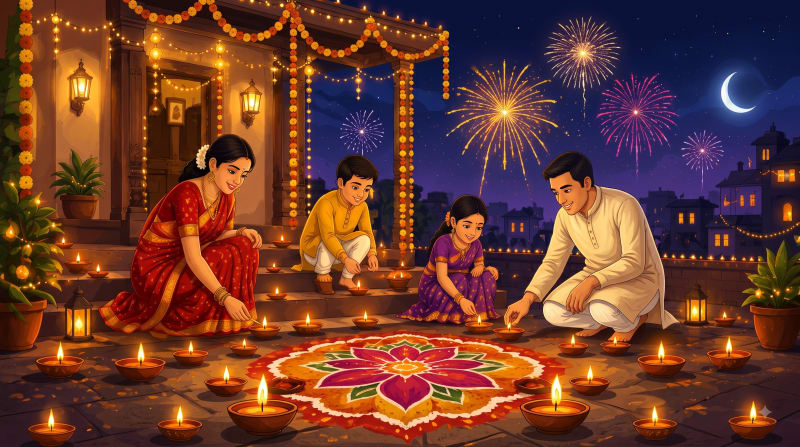
Diwali / Lakshmi Pujan / Kali Puja
Ashwin, Amavasya
Diwali, the festival of lights, marks Lord Rama's return to Ayodhya after exile. Homes and temples are lit with rows of diyas, and Lakshmi Pujan is performed in the evening for prosperity. On the same night Bengal and eastern India celebrate Kali Puja, and in much of South India the festival is known as Deepavali.
Read more →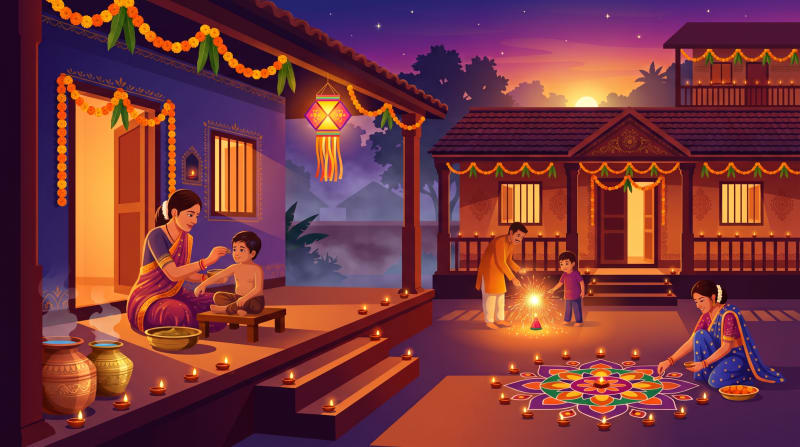
Narak Chaturdashi / Choti Diwali
Ashwin, Krishna Chaturdashi
Narak Chaturdashi marks Lord Krishna's victory over Narakasura. It is observed before dawn with abhyanga snan, a ritual oil bath, and the lighting of lamps.
Read more →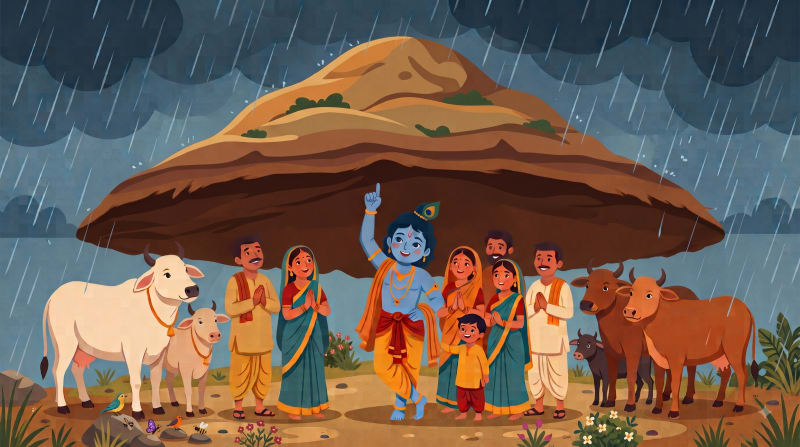
Bali Pratipada / Govardhan Puja
Kartik, Shukla Pratipada
Govardhan Puja, observed on Kartik Shukla Pratipada just after Diwali, marks Lord Krishna lifting Govardhan hill to shelter the people of Vraj from Lord Indra's storm. Devotees prepare an Annakut, a large offering of food. The same day is also celebrated as Bali Pratipada, honouring King Bali.
Read more →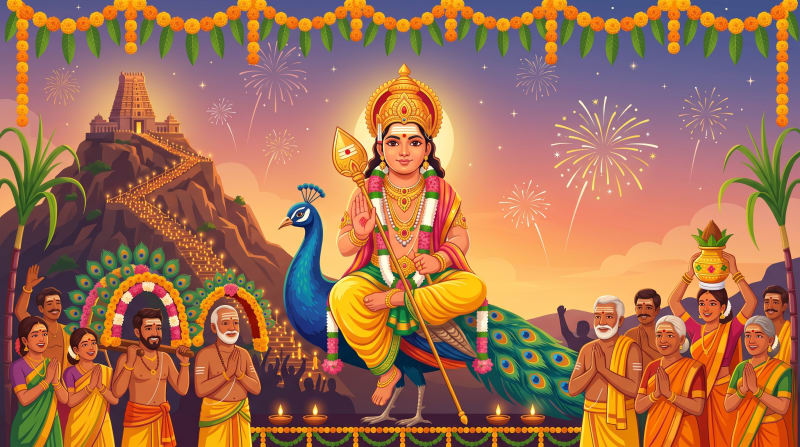
Skanda Sashti / Soorasamharam
Kartik, Shukla Pratipada – Shashthi
Skanda Sashti is six days of fasting and prayer at Murugan temples, closing with Soorasamharam, which marks Lord Murugan's victory over the asura Surapadman.
Read more →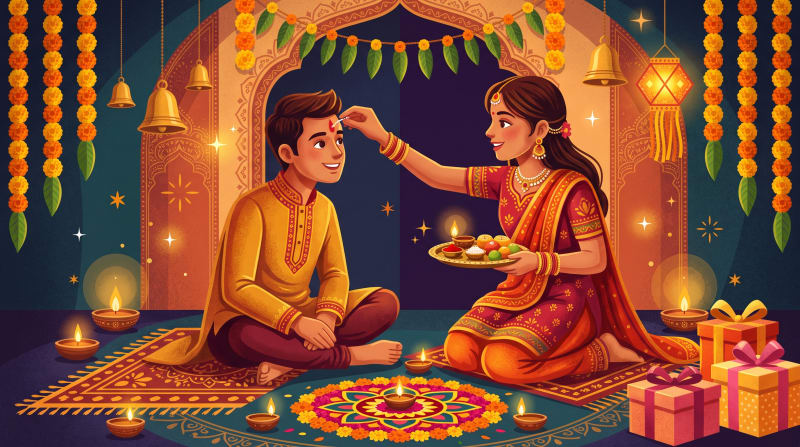
Bhau Beej / Bhai Dooj / Bhai Phonta
Kartik, Shukla Dwitiya
Bhai Dooj, known in Maharashtra as Bhau Beej and in Bengal as Bhai Phonta, closes the Diwali festival. Sisters perform aarti for their brothers and pray for their wellbeing, and brothers offer gifts in return.
Read more →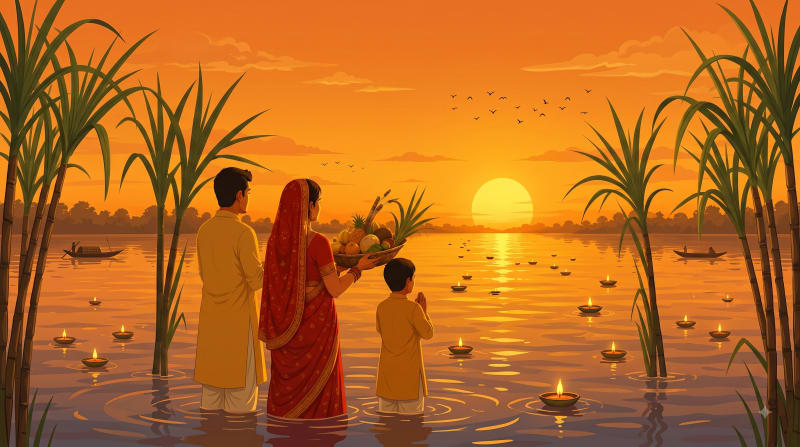
Chhath Puja / Surya Shashthi
Kartik, Shukla Chaturthi – Saptami
Chhath Puja, also called Surya Shashthi, is a four-day festival honouring Surya Dev, the sun god, and Chhathi Maiya. It begins with Nahay Khay and Kharna, and on the third day, Kartik Shukla Shashthi, devotees offer arghya to the setting sun by a river or water body, closing with an offering to the rising sun the next morning.
Read more →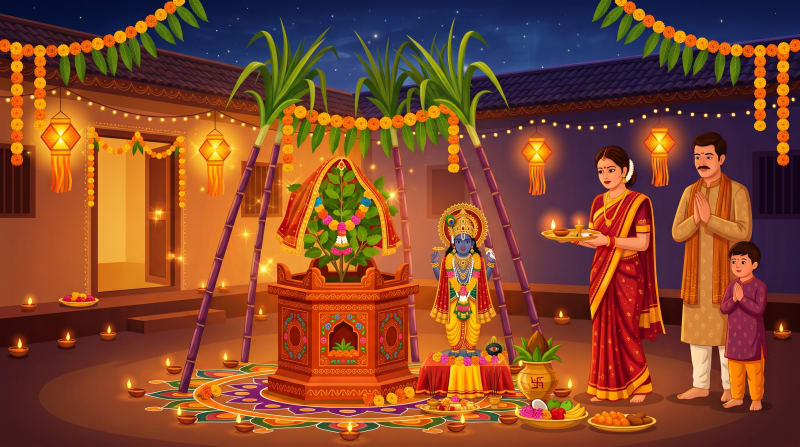
Tulsi Vivah
Kartik, Shukla Dwadashi – Purnima
Tulsi Vivah celebrates the ceremonial marriage of Tulsi Devi, the sacred basil, with Lord Vishnu as Shaligram, and marks the start of the wedding season in many households. In Maharashtra it is celebrated from Dwadashi to Purnima.
Read more →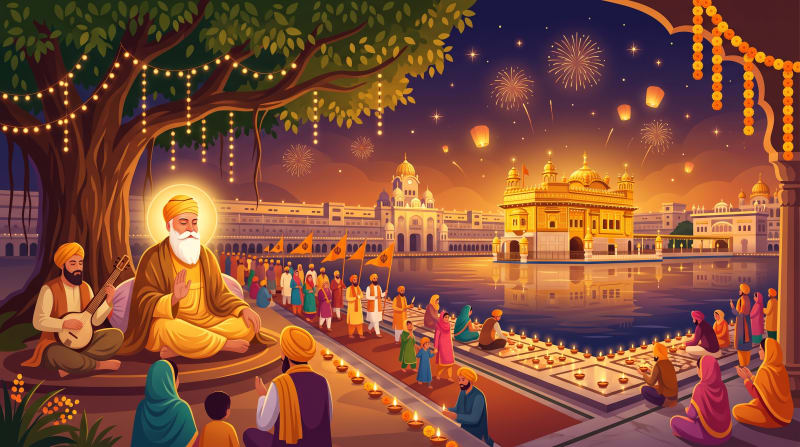
Guru Nanak Jayanti / Gurpurab / Prakash Parv
Kartik, Purnima
Guru Nanak Jayanti, also called Gurpurab or Prakash Parv, marks the birth of Guru Nanak Dev Ji, founder of the Sikh faith. It is observed with the Akhand Path, early-morning prabhat pheris, kirtan, nagar kirtan processions and langar, and gurdwaras are lit through the night.
Read more →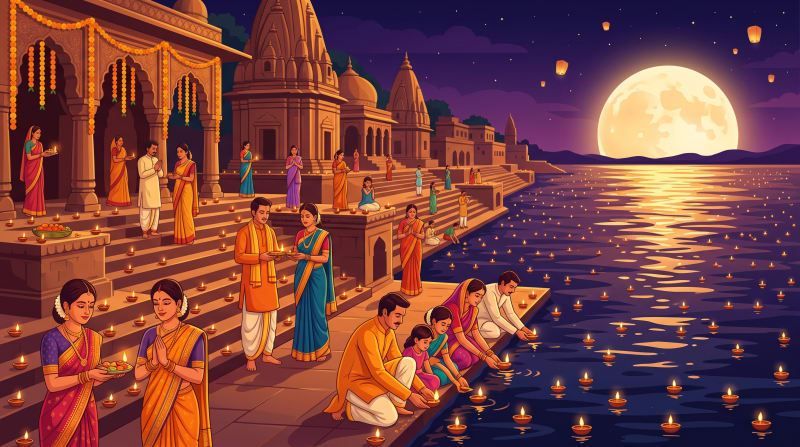
Kartik Purnima / Tripurari Purnima / Dev Deepawali
Kartik, Purnima
Kartik Purnima, the full moon of Kartik, is observed with holy dips in rivers and the lighting of lamps. Tradition holds that Lord Shiva vanquished Tripurasura on this day, which gives it the name Tripurari Purnima, and Varanasi celebrates it as Dev Deepawali.
Read more →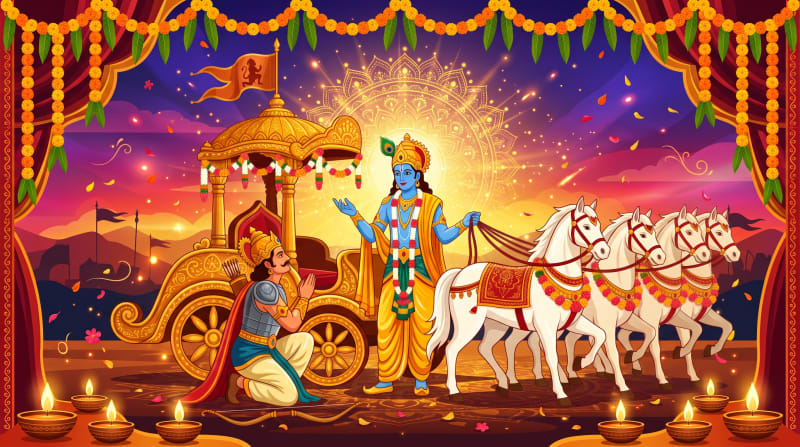
Gita Jayanti / Mokshada Ekadashi
Margashirsha, Shukla Ekadashi
Gita Jayanti marks the day on which, tradition holds, Lord Krishna spoke the Bhagavad Gita to Arjuna at Kurukshetra. It is observed with recitation of the Bhagavad Gita, and the same day is kept as Mokshada Ekadashi.
Read more →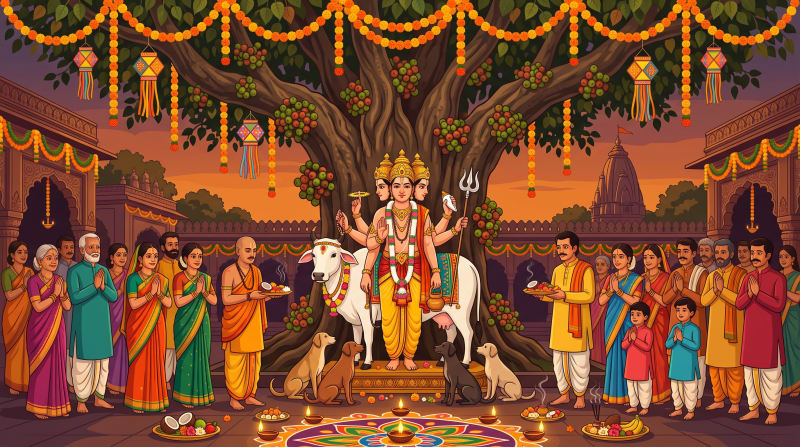
Datta Jayanti / Annapurna Jayanti
Margashirsha, Purnima
Dattatreya Jayanti marks the birth of Lord Dattatreya, revered as the embodiment of Brahma, Vishnu and Shiva. It is observed with bhajans, reading of the Guru Charitra and evening worship at Datta temples. The same full moon is also kept as Annapurna Jayanti, honouring Goddess Annapurna.
Read more →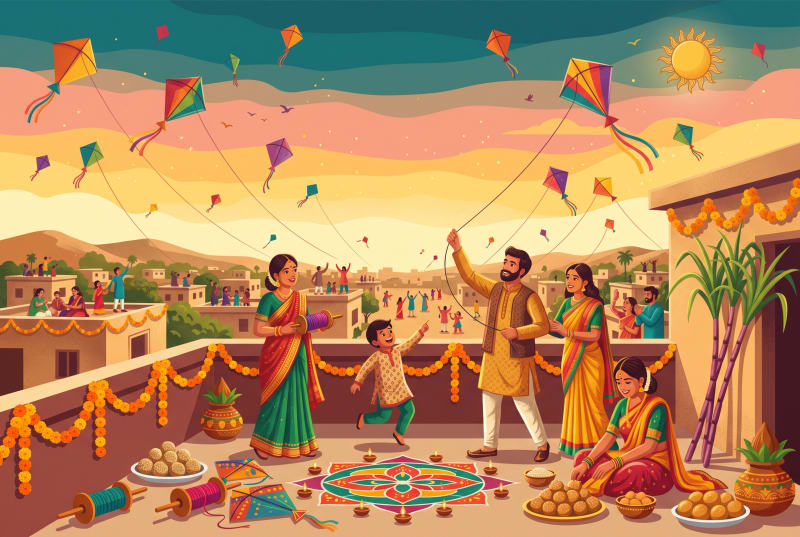
Makar Sankranti / Pongal / Uttarayan
Paush, Shukla Saptami
Makar Sankranti marks the sun's entry into Makara (Capricorn), which tradition holds to be the start of Uttarayana, and so follows the solar calendar. It is celebrated as Pongal in Tamil Nadu, Uttarayan in Gujarat and Magh Bihu in Assam, with Lohri in Punjab just before it. In Maharashtra, til-gul, sweets of sesame and jaggery, are shared.
Read more →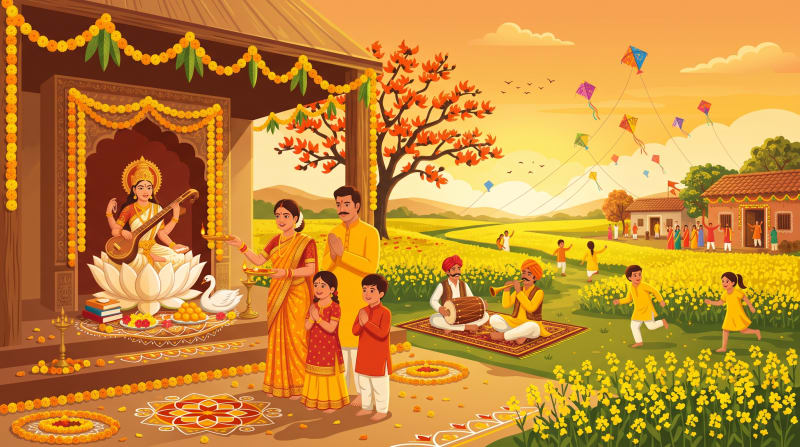
Vasant Panchami / Saraswati Puja
Magh, Shukla Panchami
Vasant Panchami welcomes spring and is dedicated to Goddess Saraswati, who presides over learning, music and the arts. In Bengal and eastern India it is observed as Saraswati Puja. Devotees wear yellow, and many children are introduced to their letters on this day.
Read more →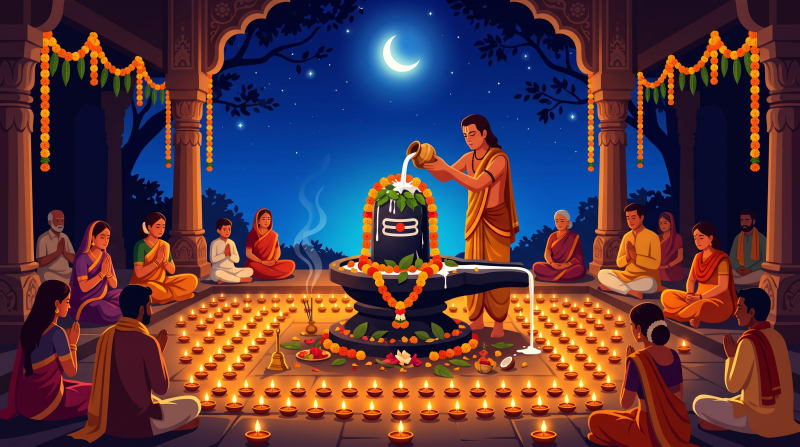
Maha Shivratri
Magh, Krishna Chaturdashi
Maha Shivratri, the great night of Lord Shiva, is observed with fasting, abhishekam of the Shivalinga and a vigil with worship through all four watches of the night.
Read more →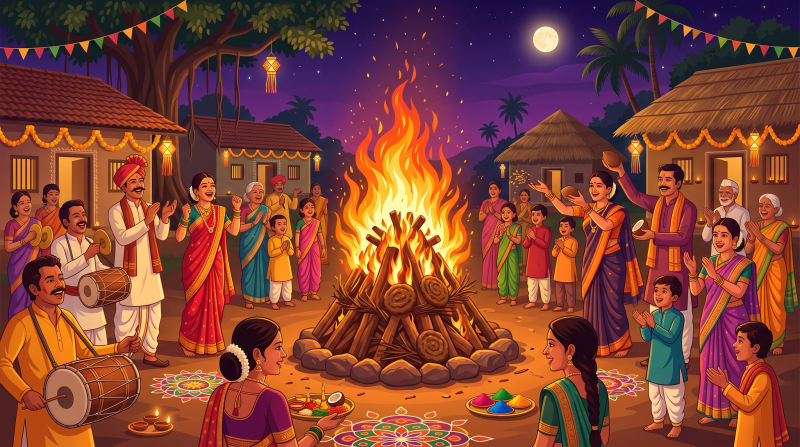
Holika Dahan / Shimga
Phalgun, Purnima
Holika Dahan is the bonfire lit on the full moon of Phalgun, on the eve of the festival of colours, recalling Lord Vishnu's protection of Prahlad. In the Konkan it is celebrated as Shimga.
Read more →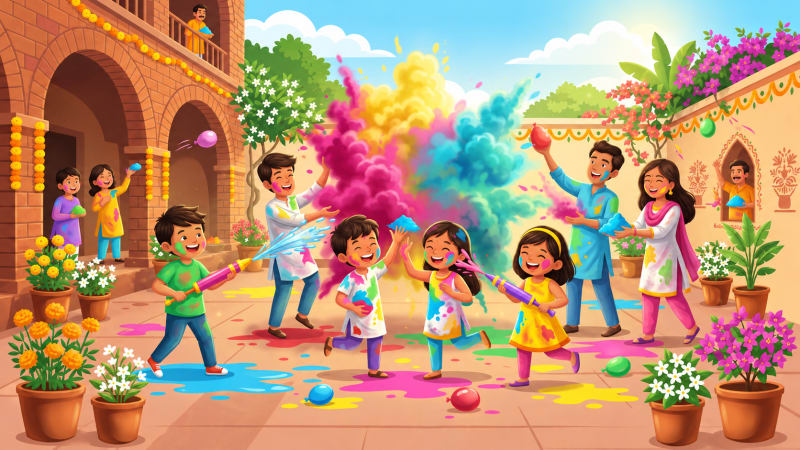
Holi / Dhulivandan / Dhulandi
Phalgun, Krishna Pratipada
Holi, also called Dhulivandan or Dhulandi, is the festival of colours that follows Holika Dahan. Friends and families play with coloured powder and water and share festive sweets, and in Maharashtra colours are played again on Rang Panchami.
Read more →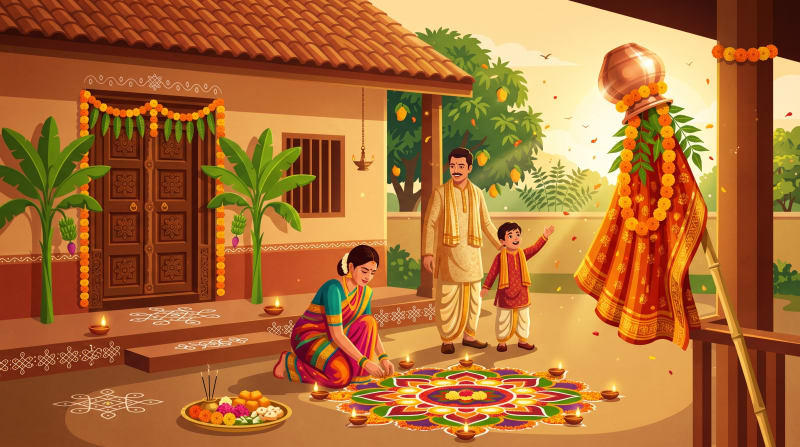
Gudi Padwa / Ugadi / Navreh
Chaitra, Shukla Pratipada
Gudi Padwa in Maharashtra, Ugadi in Karnataka, Andhra Pradesh and Telangana, and Navreh in Kashmir mark the Hindu New Year. On Gudi Padwa, homes raise a gudi, a decorated pole crowned with an upturned vessel, and Ugadi is welcomed with pachadi, a dish of six tastes.
Read more →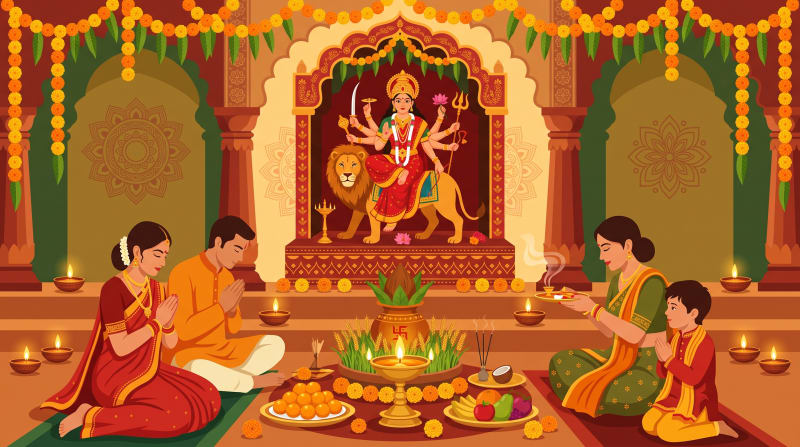
Chaitra Navratri / Vasant Navratri
Chaitra, Shukla Pratipada – Navami
Chaitra Navratri, also called Vasant Navratri, is nine days of worship of Goddess Durga in her different forms, beginning with Ghatasthapana on the Hindu New Year and concluding with Ram Navami.
Read more →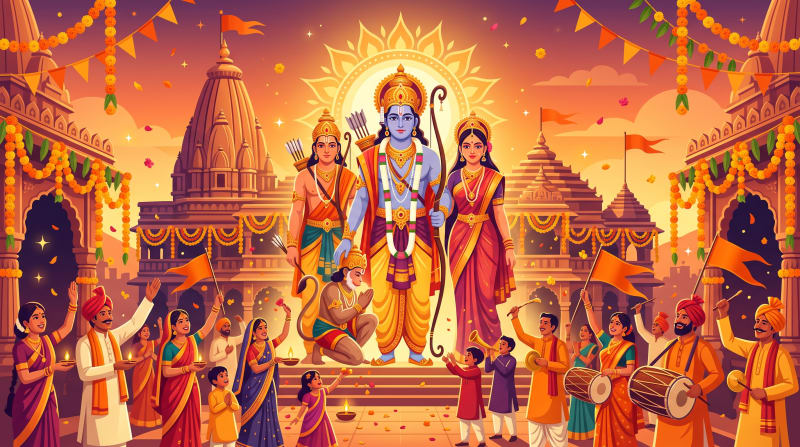
Ram Navami / Sri Rama Navami
Chaitra, Shukla Navami
Ram Navami marks the birth of Lord Rama at Ayodhya and closes Chaitra Navratri. It is observed with prayers at midday, readings of the Ramayana and processions.
Read more →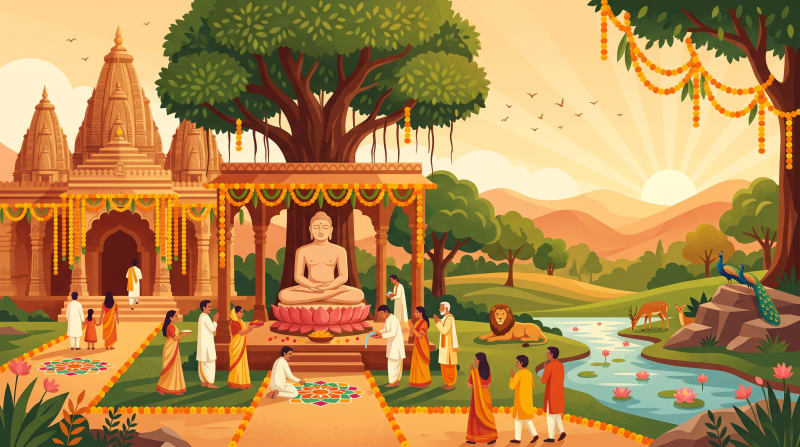
Mahavir Jayanti / Mahavir Janma Kalyanak
Chaitra, Shukla Trayodashi
Mahavir Jayanti, also called Mahavir Janma Kalyanak, marks the birth of Bhagwan Mahavir, the twenty-fourth Tirthankara of Jainism. It is observed with prayers at Jain temples, the ceremonial bathing of his idol, processions carrying his image in a chariot, and acts of charity.
Read more →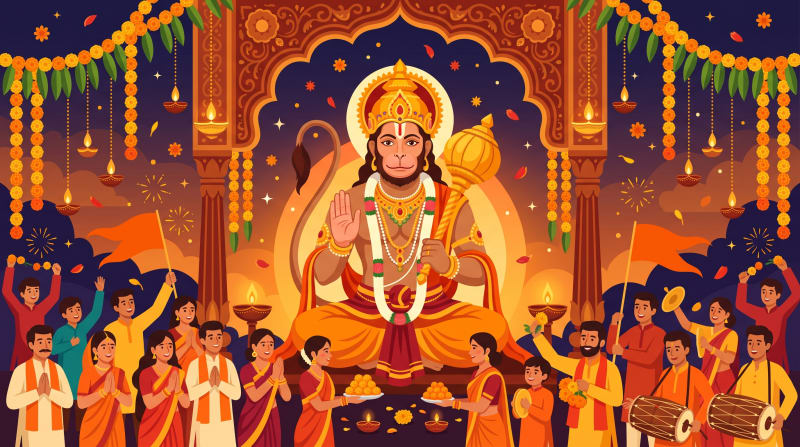
Hanuman Jayanti
Chaitra, Purnima
Hanuman Jayanti marks the birth of Lord Hanuman, observed with worship at sunrise and recitation of the Hanuman Chalisa. Several regions, including parts of South India, observe it on other dates in their own calendars.
Read more →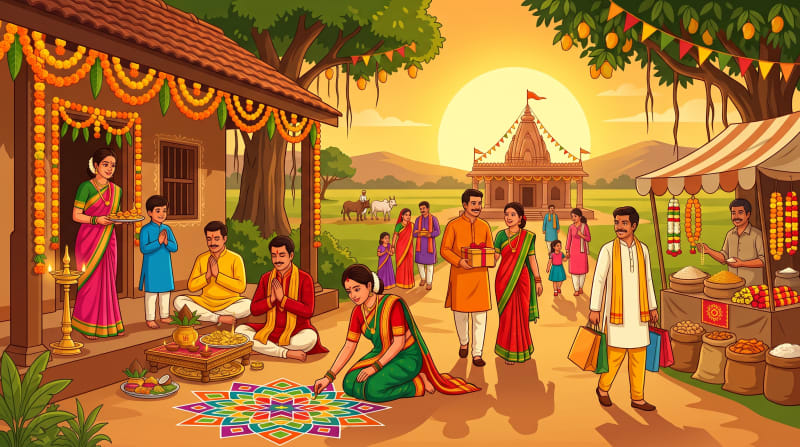
Akshaya Tritiya / Akha Teej
Vaishakh, Shukla Tritiya
Akshaya Tritiya, also called Akha Teej, takes its name from 'akshaya', meaning never diminishing: tradition holds that good deeds, gifts and new beginnings made on this day bring lasting merit. It is observed with worship and charity, and is traditionally considered auspicious for buying gold.
Read more →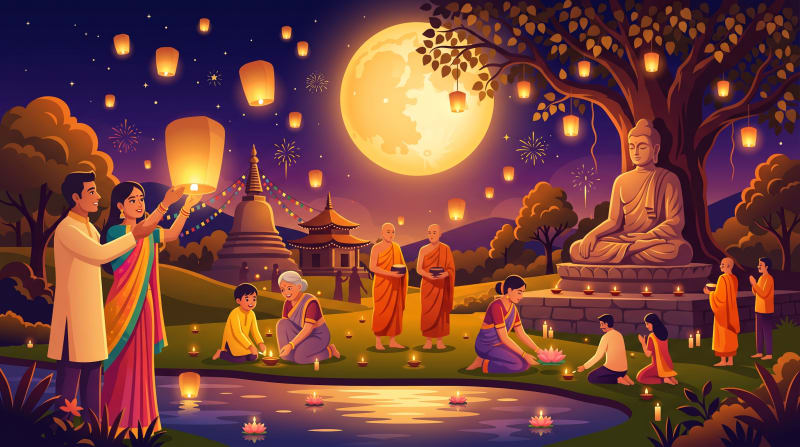
Buddha Purnima / Buddha Jayanti / Vesak
Vaishakh, Purnima
Buddha Purnima, also called Buddha Jayanti or Vesak, marks the birth, enlightenment and mahaparinirvana (final passing) of Lord Buddha, all three of which, tradition holds, fell on the full moon of Vaishakh. It is observed with prayers at Buddhist shrines, the lighting of lamps and acts of kindness.
Read more →No upcoming festival dates are listed right now.
Past festivals
11 festivals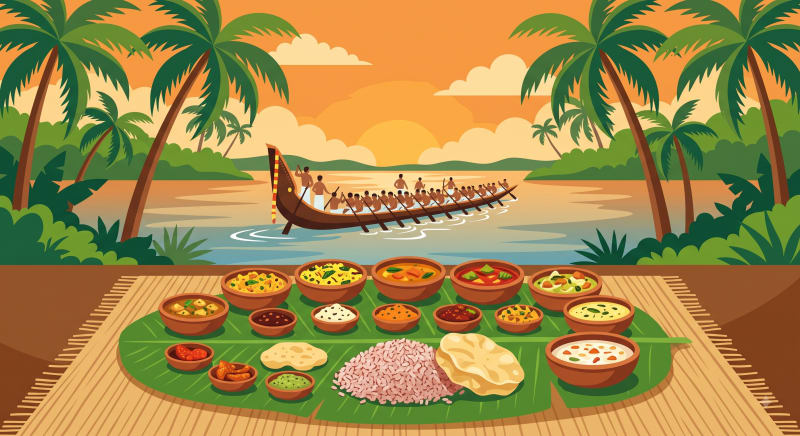
Onam / Thiruvonam
Shravan, Shukla Chaturthi – Trayodashi
Onam is Kerala's harvest festival, marking, as tradition holds, the annual homecoming of King Mahabali. It runs in the Malayalam month of Chingam from Atham to its main day, Thiruvonam, and is celebrated with pookalam (flower rangoli), the Onasadya feast and boat races.
Read more →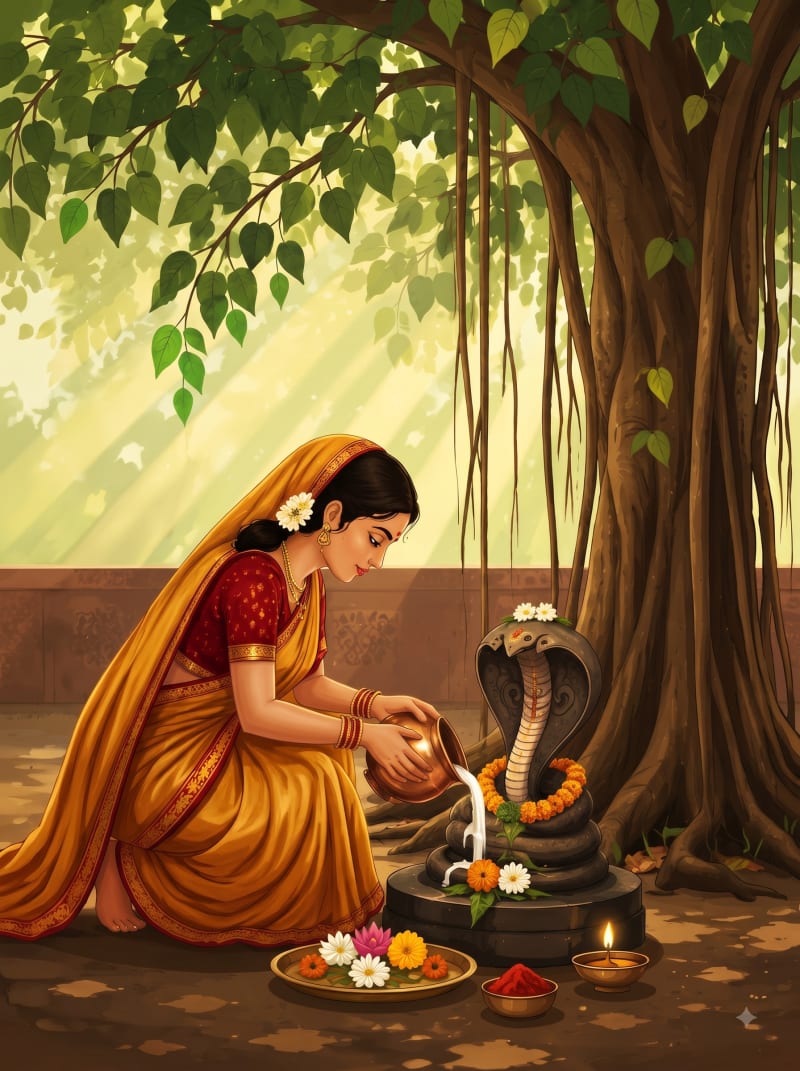
Nag Panchami
Shravan, Shukla Panchami
Nag Panchami honours snake deities (Nagas) and is observed with offerings of milk at snake idols or anthills and with prayers for protection from snakebite.
Read more →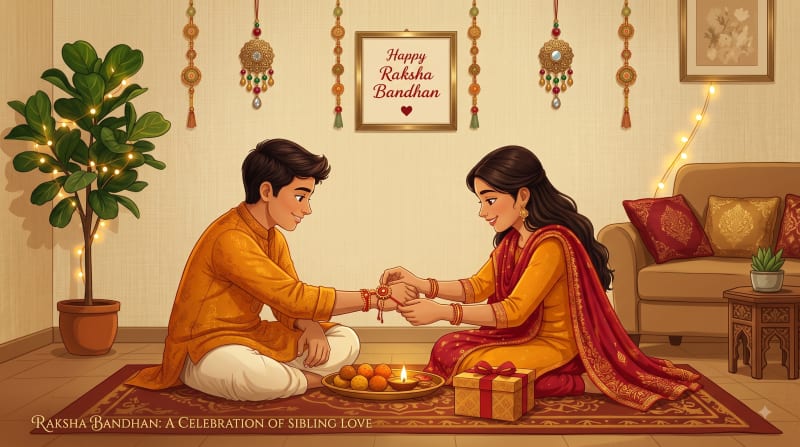
Raksha Bandhan / Narali Purnima
Shravan, Purnima
Raksha Bandhan marks the bond between brothers and sisters and is observed with the tying of a protective thread (rakhi). On the same day, coastal Maharashtra celebrates Narali Purnima, offering coconuts to the sea.
Read more →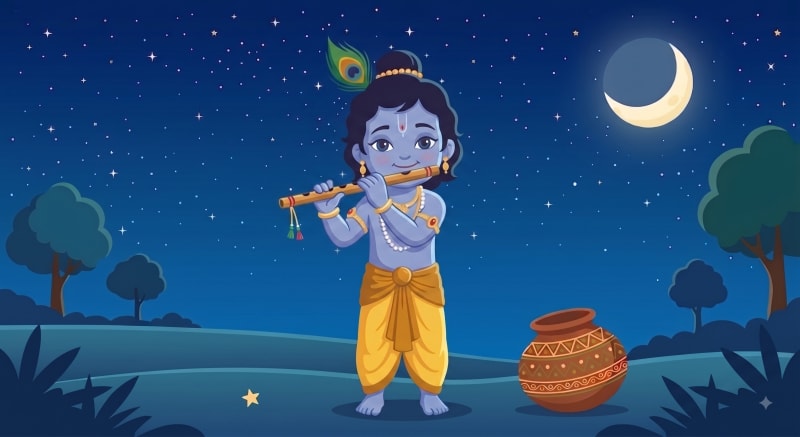
Gokulashtami / Krishna Janmashtami / Dahi Handi
Shravan, Krishna Ashtami – Navami
Krishna Janmashtami, also called Gokulashtami, marks the birth of Lord Krishna, observed with a midnight vigil and bhajans. The next day is celebrated in Maharashtra as Gopalkala, when teams form human pyramids to break the Dahi Handi.
Read more →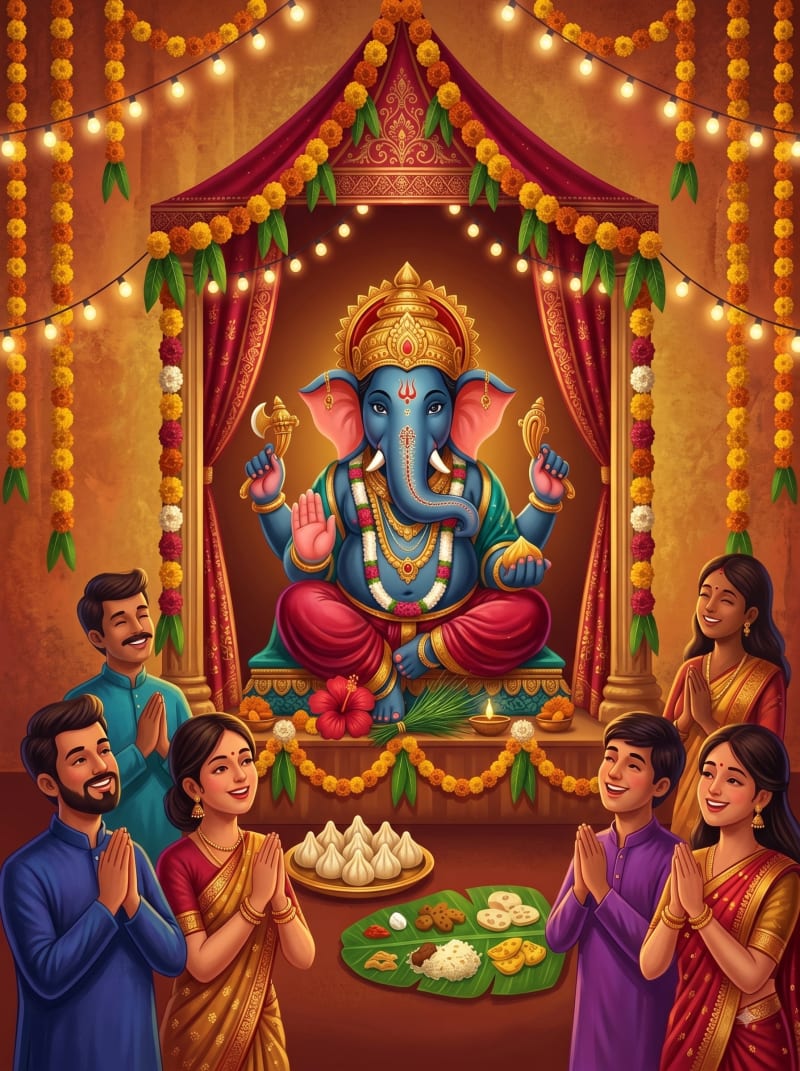
Ganeshotsav / Ganesh Chaturthi / Vinayaka Chaturthi
Bhadrapad, Shukla Chaturthi – Chaturdashi
Ganeshotsav begins on Ganesh Chaturthi, known in South India as Vinayaka Chaturthi, with the installation of Lord Ganesha's idol, continues with daily aarti, and closes on Anant Chaturdashi with immersion. It is celebrated on a large scale in Maharashtra.
Read more →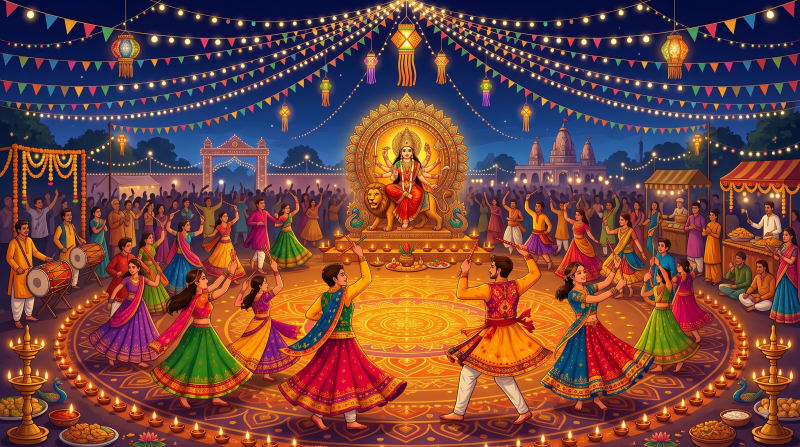
Navratri / Sharad Navratri
Ashwin, Shukla Pratipada – Navami
Sharad Navratri is nine nights of worship of Goddess Durga in her different forms, beginning with Ghatasthapana and leading to Dasara. It is celebrated with garba and dandiya in Gujarat and with Golu in South India, and its final days coincide with Durga Puja in Bengal.
Read more →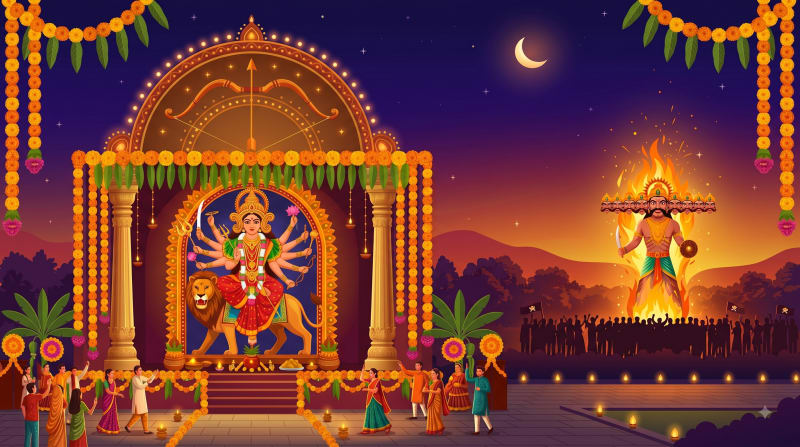
Dasara / Vijayadashami / Dussehra
Ashwin, Shukla Dashami
Dasara, or Vijayadashami, celebrates both Lord Rama's victory over Ravana and Goddess Durga's victory over Mahishasura, with processions and effigy burning. In Maharashtra, apta leaves are exchanged as symbolic gold.
Read more →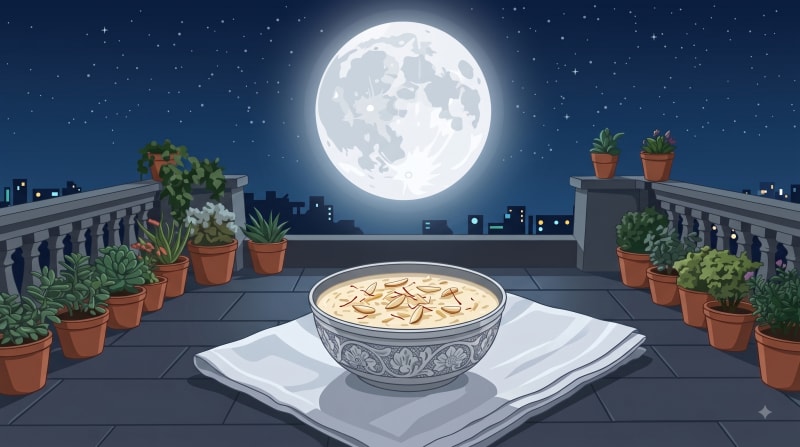
Kojagiri Purnima / Sharad Purnima
Ashwin, Purnima
Sharad Purnima, the full moon night of Ashwin, is associated with Lord Krishna's raas leela and is marked with moonlit prayers and kheer offerings. In Maharashtra it is celebrated as Kojagiri Purnima, with a night vigil and saffron milk shared under the moon.
Read more →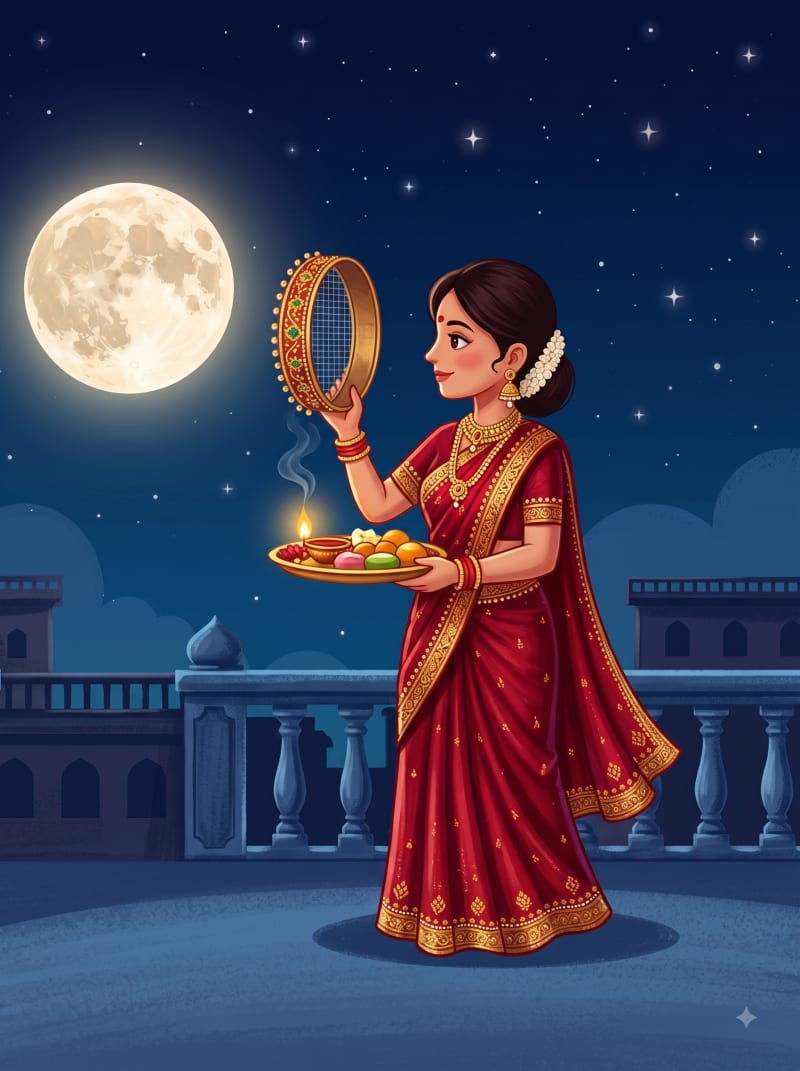
Karva Chauth / Karaka Chaturthi
Ashwin, Krishna Chaturthi
Karva Chauth, also called Karaka Chaturthi, is a day of fasting observed by married women for their husbands' wellbeing, concluding with the sighting of the moon.
Read more →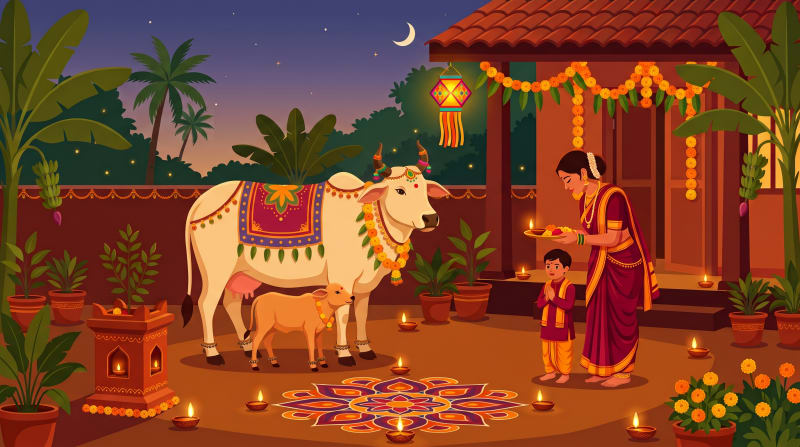
Vasu Baras / Govatsa Dwadashi
Ashwin, Krishna Dwadashi
Vasu Baras, also called Govatsa Dwadashi, opens the Diwali festival in Maharashtra and Gujarat. Cows and their calves are worshipped as symbols of nourishment and abundance.
Read more →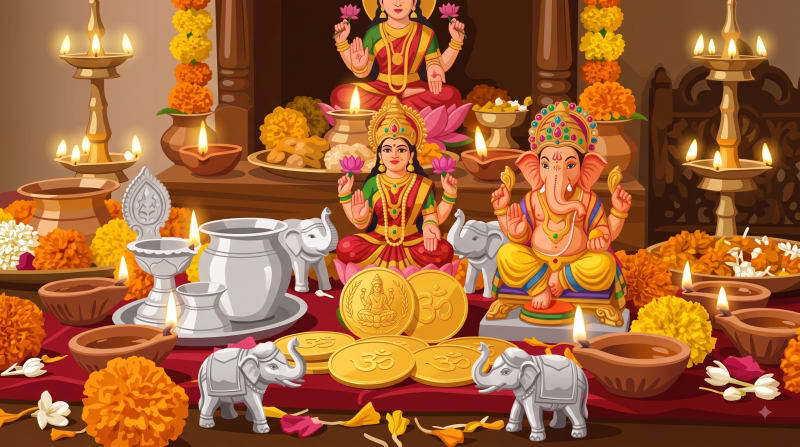
Dhantrayodashi / Dhanteras / Dhanvantari Jayanti
Ashwin, Krishna Trayodashi
Dhanteras, also called Dhantrayodashi, begins the five days of Diwali. It is also observed as Dhanvantari Jayanti, honouring Lord Dhanvantari, and is traditionally considered auspicious for new purchases.
Read more →